Inside Ragsdale: A Hospitality-Inspired Approach to Multifamily Design

Updated: Jul 27
Upgrading the experience of coming home in downtown Phoenix.

Today's residents expect more from where they live. They're looking for places that support how they work, gather, recharge, and connect. Many of the qualities once associated with hotels and resorts have become part of everyday living.
At Ragsdale, a 266-unit multifamily community in Downtown Phoenix, we approached the design through that lens. Named after Dr. Lincoln Ragsdale, a civil rights leader whose advocacy helped shape Phoenix's history, the project presented an opportunity to think beyond the apartment itself and focus on the experiences happening around it. From arrival to amenity spaces, we wanted every touchpoint to contribute to a stronger sense of community, connection, and place.
Designing the arrival experience.

One of the questions we returned to throughout the design process was simple: how do we make people feel welcome before they ever reach their front door?
In hospitality, arrival matters. It sets the tone for everything that follows. At Ragsdale, we approached the lobby as more than a pass-through space, designing it as a moment of transition between the energy of Downtown Phoenix and the comfort of home. Anchored by an integrated tree planter, the space introduces a sense of softness and grounding within an urban setting, while warm materials, residential furnishings, and desert-inspired tones create an atmosphere that feels distinctly connected to place. Rather than focusing solely on first impressions, we wanted the arrival experience to feel welcoming, familiar, and reflective of the community beyond it.
Thinking beyond the amenity checklist.

Most multifamily communities offer similar amenities. A clubhouse. A fitness center. A coworking space. A pool. Bike storage. The challenge isn't deciding what spaces to include. It's creating spaces residents genuinely want to use. As we developed Ragsdale, we approached each amenity as part of a larger journey rather than a standalone destination. Instead of asking what spaces the project needed, we spent more time considering how residents would move through them throughout the course of a day. The clubhouse was designed to feel like an extension of home, large enough to host a gathering, yet comfortable enough for a quiet afternoon. The business center includes a kitchenette to support longer stays, while the fitness center was positioned to take advantage of views overlooking the pool deck, maintaining a connection to the activity happening beyond its walls. By viewing each space as part of a connected experience, we were able to create opportunities for residents to naturally move between working, socializing, exercising, and relaxing. It's a perspective rooted in hospitality design: every touchpoint matters, and the most successful communities aren't defined by individual amenities, but by how they work together.
Designing for how people gather.

Of all the spaces throughout the project, the rooftop terraces remain one of our favorites.
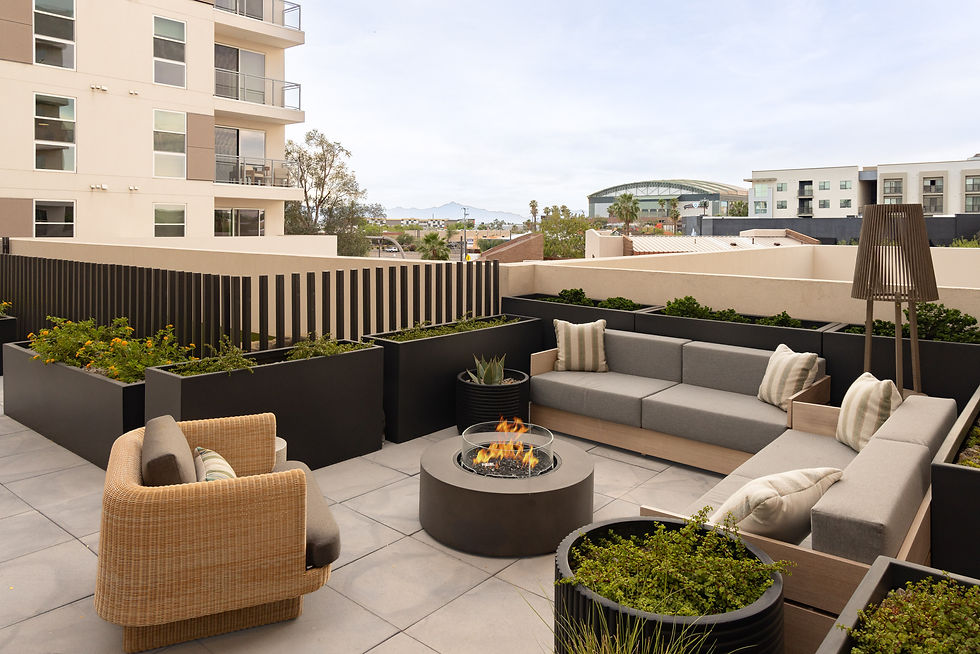
Living in Phoenix means spending much of the year outdoors, and we wanted the rooftop experience to reflect that. Rather than creating a single gathering space, we designed a series of distinct zones that support different ways of spending time there. Private cabanas, outdoor kitchens, games, flexible seating areas, and views overlooking Downtown Phoenix create opportunities for both activity and retreat. Some residents may come to host friends. Others may come to unwind after work or enjoy a quiet morning outdoors. The space was intentionally designed to accommodate both. The goal wasn't simply to create another amenity. It was to create places people would actively seek out.
Where community comes together.

While individual units provide comfort and privacy, some of the most memorable moments happen outside them. A conversation with a neighbor. A spontaneous gathering. An evening spent working somewhere other than home. These moments can't be programmed, but they can be designed for.
Throughout the project, we looked for opportunities to create spaces that encourage people to linger a little longer, cross paths more often, and feel connected to the larger community around them.
The finishing layer that shapes experience.
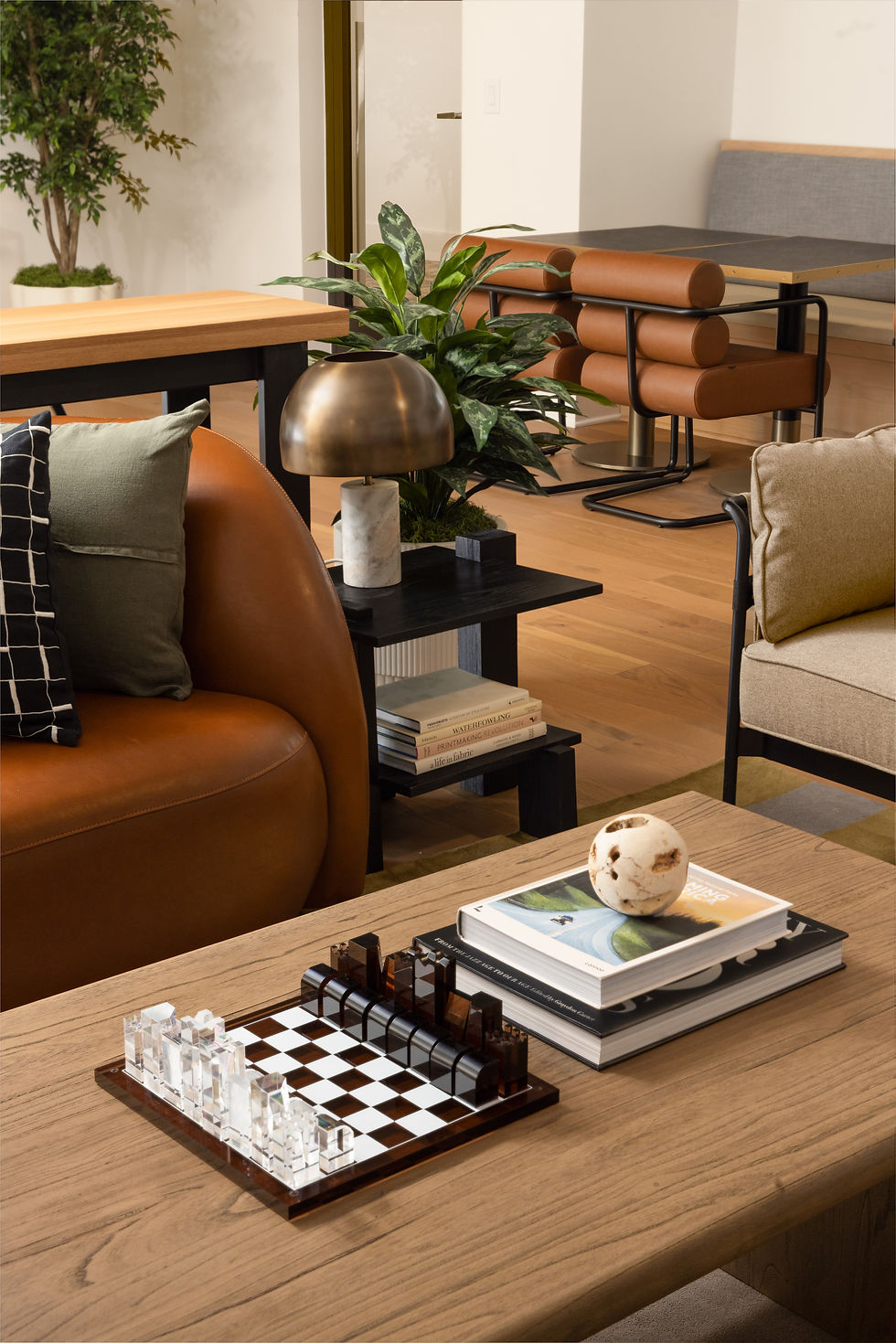
While architecture establishes the framework, it's often the finishing layers that bring a space to life. Throughout the project, furnishings, artwork, accessories, and material selections were carefully curated to add warmth, character, and individuality to each space. Rather than approaching procurement as a final step, it became an integral part of the design process. These details may not always be the first thing people notice, but they're often what make a space feel lived in from day one.
A different approach to multifamily.

Ragsdale represents House of Form's first completed multifamily community, but the thinking behind it has been shaped by years of designing hospitality environments.
If there's one thing this project reinforced, it's that multifamily design extends far beyond the apartment itself.
Because at the end of the day, we don't design apartment communities. We design the experience of coming home.
Project Team
Interior Design: House of Form
Developer: Hawkins Company
Architect: Nelsen Partners
General Contractor: W.E. O'Neil Construction
Photography: Kevin Brost


