The Making of Mezze:

Updated: Sep 11
The Story Behind a Hospitality-Inspired Concrete Color Collection
I've always been fascinated by how color comes to life.
Every year, I wait to see Pantone's Color of the Year and find myself wondering the same thing. Who decided this? What conversations happened behind closed doors? What research led to this single color representing an entire moment in time?

When the opportunity came to collaborate with SlabHaus on a custom color collection, I realized I finally had the chance to answer that question for myself.
I've collaborated on products before, but never purely through the lens of color. There wasn't a client brief or a project site to respond to. There was simply a blank canvas and curiosity.
If House of Form could tell its story through color alone, what would it look like?
The answer didn't come from paint chips or trend reports. It came from the table.

If you've followed my work, you know that I believe the table is one of the most important places we gather. It doesn't matter whether it's in a restaurant, around a family dining table, or a picnic in the park. Some of life's most meaningful conversations happen over food.
When I began researching, I noticed something that felt both obvious and profound. Nearly every culture has its own version of small shared plates. Japan has izakaya. Spain has tapas. The Middle East has mezze. Different traditions, different flavors, but the same human instinct to gather, share, and connect.
That observation became the foundation for the collection.

Mezze was especially personal to me. It's something I grew up with in the Middle East. Vibrant vegetables. Earthy grains. Warm spices. Fresh herbs. Rich olives. Roasted eggplant. Creamy tahini. Bright citrus. There’s a subtle ache that comes with living far from the foods and traditions that shaped you, and studying these colors became an unexpected way of reconnecting with them. Every plate feels layered with color, yet none of the colors feel manufactured. They're pulled directly from the earth.
That distinction became incredibly important.
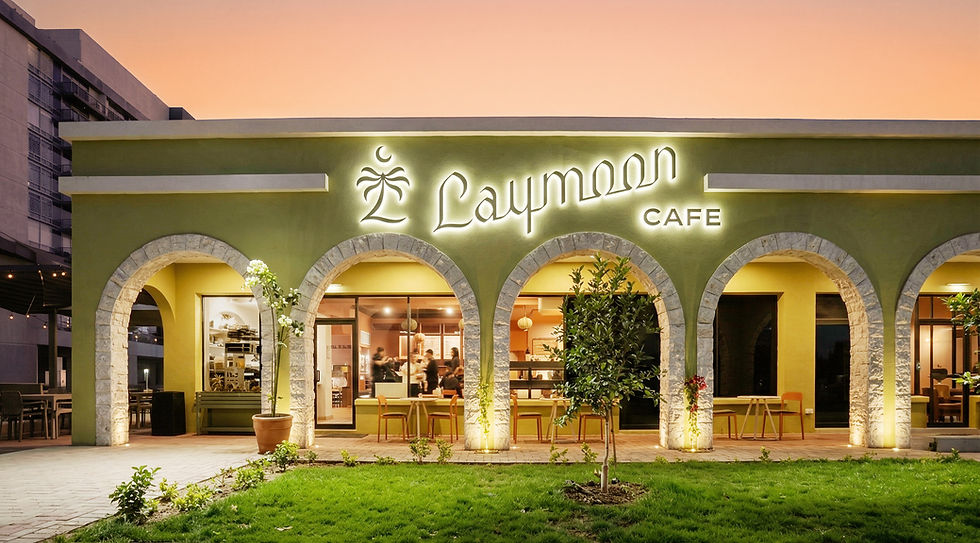
I wasn't interested in creating colors that shouted for attention. I wanted colors that felt discovered rather than invented. Colors that carried the richness of natural ingredients while still feeling sophisticated enough to live inside (or outside) beautifully designed spaces.
As I studied images of these foods, I was also studying our own work at House of Form.
I looked across our portfolio and our current projects, paying attention to the colors we kept gravitating toward. The ones that felt familiar, but just unexpected enough to push our clients beyond what they might have chosen on their own. Those moments where a color creates just enough tension to make a space feel memorable.
Somewhere between those two worlds, the palette began to reveal itself.

Working alongside Brandon at SlabHaus became one of my favorite parts of the process. I'd bring him inspiration rooted in ingredients, architecture, and hospitality, and then we'd watch concrete do what concrete does. Pigment has a personality of its own. It doesn't always behave exactly the way you imagine, and honestly, that's part of the beauty.
Some colors became softer. Others picked up more warmth or depth than I expected. Little by little, the collection found its own identity.

Today, when I look at the finished palette, I don't just see colors. I see places, meals shared with family, restaurants filled with conversation, and materials that feel timeless instead of trendy.
Most importantly, I see colors that work just as beautifully on their own as they do together. They can quietly blend into a space or become the feature that anchors an entire room. I can't wait to see them interpreted in ways I never imagined.
For me, this collaboration was never really about creating a color collection. It was about exploring where color comes from in the first place. And it turns out, for me, it starts around a shared table. XOXO,

The Mezze Collection is now available to explore here.